Why Premium Wine Makes a Better Gift Than Aged Whisky


When choosing a refined, meaningful gift, the decision often comes down to two classic options: premium wine or aged whisky. Both carry prestige, heritage, and a sense of occasion. But if you look beyond the surface and ask what truly happens to each product over time, a clear difference emerges.
Put simply:
- Wine continues to evolve.
- Whisky, at a certain point, stops.
Wine as a Living Product: Evolution Over Time
Premium wine is not a finished product at the moment it is bottled. In many ways, bottling marks the beginning of its second life — one in which it continues to develop slowly, sometimes over decades.
The difference between a wine at 5 years and the same wine at 15 or 20 years can be remarkable. Firm tannins soften and integrate, primary fruit aromas evolve into deeper, more complex layers, and tertiary notes such as leather, tobacco, spice, and dried fruits begin to emerge. The structure becomes more harmonious, the texture more refined, and the overall experience more nuanced and complete.
This is not a marginal improvement. It is a genuine transformation.
Whisky: Development with a Natural Limit
Whisky also develops — but only while it is maturing in the cask. This is where it gains its character, depth, and complexity.
The difference between a young whisky and one aged 10–12 years is clear and meaningful. However, beyond that point, the curve of development begins to flatten significantly.
After roughly 12–15 years:
- the core flavor profile is already formed
- aromatic changes become increasingly subtle
- textural differences are minimal
In practical terms, this means that the difference between a 12-year-old whisky and a 25–30-year-old expression is often relatively small in sensory terms — while the difference in price can be substantial.
Can Even Experts Reliably Tell the Difference?
It is natural to assume that experienced tasters can easily distinguish older whisky from younger ones. In reality, the situation is more nuanced.
Research and blind tasting experiments suggest that even experts do not always reliably distinguish between whisky categories, and that perception can be significantly influenced by context, environment, and expectation.
In other words:
If the difference between 12 and 30 years were truly dramatic, it would be consistently obvious in blind tastings.
In practice, it is often subtle and context-dependent.
Why Is Older Whisky So Expensive?
The answer lies less in taste and more in the underlying economics.
Angel’s Share
During maturation, whisky gradually evaporates through the wood of the cask — a phenomenon known as the “Angel’s Share.”
On average, around 2% is lost each year.
- After 10 years → ~82% remains
- After 18 years → ~70% remains
Nearly 30% of the original volume disappears.
Cost of Capital
Equally important is the cost of time itself.
- Initial investment: €100
- Time: 18 years
- Capital cost: 3-6%
- Annual inflation: approx 2-3%
Result → approximately €360 required value
This is before storage, logistics, and brand costs.
Conclusion: prices increase sharply — but not in proportion to flavor development.
Wine: Same Time, Different Outcome
Wine is not exempt from time or capital. Holding a bottle for years also carries opportunity cost.
The key difference lies in what happens to the product itself.
With whisky, time mainly increases price.
With wine, time improves the product.
Between 5 and 20 years, a well-made wine can evolve significantly — becoming softer, more complex, and more expressive.
Here, time is not just a cost. It is a benefit.
What Are You Really Giving?
When you gift whisky, you are giving a finished product — one that will remain essentially unchanged.
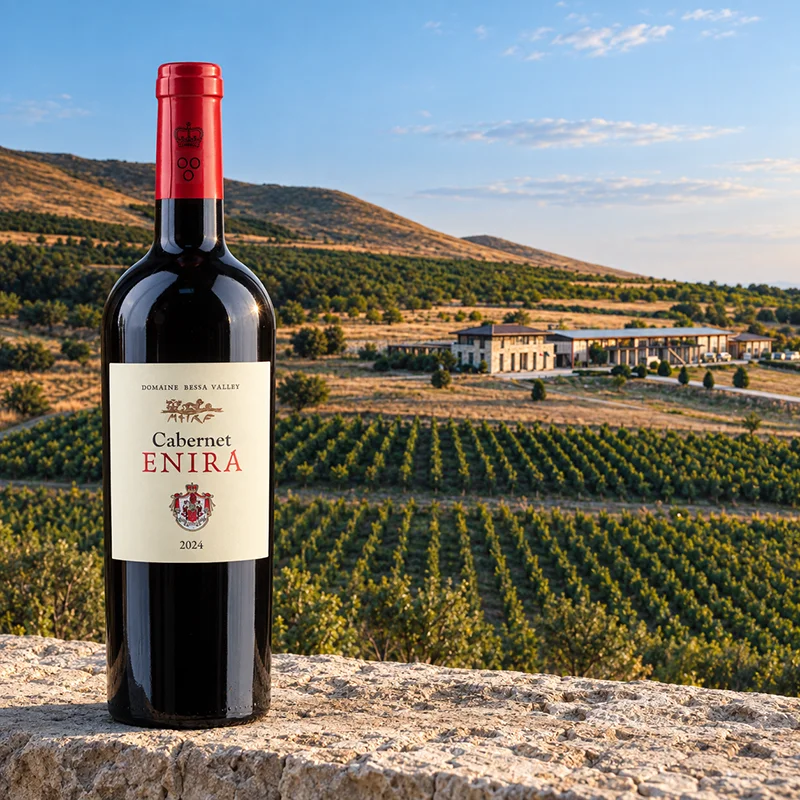
When you gift premium wine, you are giving potential — a bottle that can become even better over time.
It can be opened years later, marking a meaningful moment, and offering a richer experience than on the day it was given.
Conclusion
With whisky, you are paying for time.
With wine, you are benefiting from time.
And that is what makes premium wine the more thoughtful, emotional, and ultimately more meaningful gift.