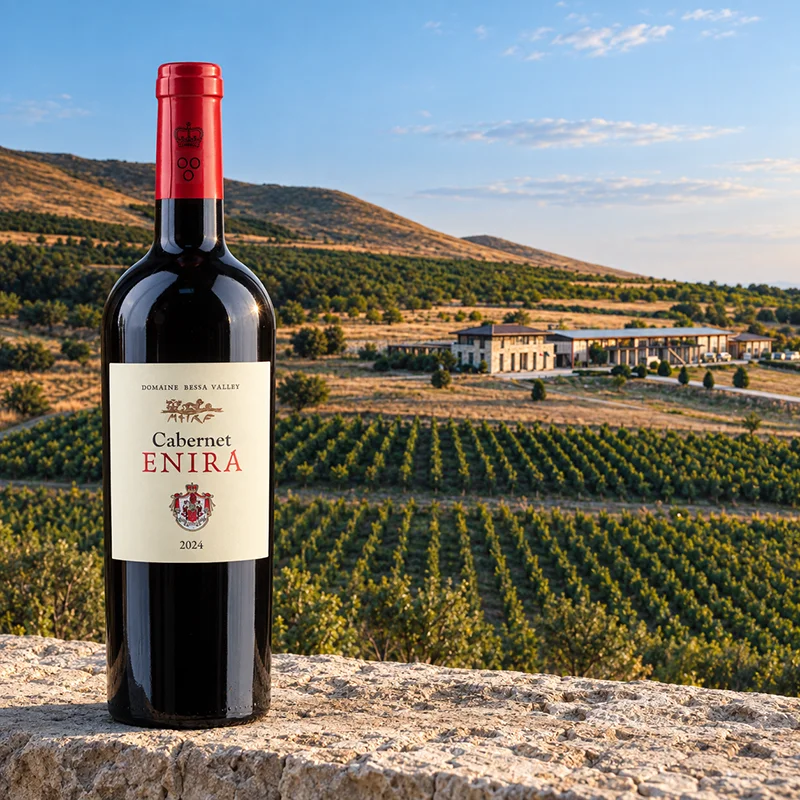

Types of red wine: the varieties behind the character of Enira wines


Types of red wine: the varieties behind the character of Enira wines
Red wine can be soft and fruity, spicy and energetic, or full-bodied, structured, and built for long aging. The difference starts with the grape variety, but it doesn’t end there. The soil, the climate, the harvest timing, the vinification, and the aging process determine how the variety’s character is expressed in the glass.
At Bessa Valley, four classic red varieties take center stage: Merlot, Syrah, Petit Verdot, and Cabernet Sauvignon. Each can create a standalone wine with its own signature, but together they build the recognizable Enira style – ripe fruit, body, freshness, fine spiciness, and elegant structure.
How terroir changes the variety’s character
The Bessa Valley vineyards are located in the Thracian Lowlands, between the Rhodope Mountains and the Maritsa River. The clay-limestone soils provide natural drainage, while the combination of warm days and cooler nights supports even ripening and preserves freshness.
This is why the same international variety does not produce the same wine everywhere in the world. Merlot from Bordeaux, California, or Bulgaria carries common varietal traits but speaks with a different accent. It is the connection between the variety and the specific site that turns wine from a beverage into an expression of origin.
Merlot – softness, fruit, and natural balance
Merlot is one of the most popular red varieties in the world and an essential part of the Enira style. It is typically recognized by aromas of ripe plum, cherry, and forest fruits, sometimes complemented by chocolate, herbal, or delicately earthy nuances. Its tannins are rounder, making the wine pleasant and accessible even at a relatively young age.
In the blend, Merlot often forms the core: it provides volume, velvety texture, and fruitiness, around which the other varieties add spice, color, and structure. The standalone Merlot 2020 demonstrates this ability of the variety to be simultaneously elegant, expressive, and versatile at the table.
Merlot pairs excellently with roasted chicken, pork and beef, duck, pasta with rich sauces, mushroom dishes, and semi-hard cheeses. It is also a suitable choice when there are several different dishes on the table and we are looking for a single red wine to unite them.
Syrah – dark fruit, spices, and energy
Syrah brings a different type of expressiveness. Characteristic of the variety are blackberry, blueberry, and ripe dark fruit, combined with black pepper, violets, smoky tones, and sometimes dark chocolate. In a warm but well-balanced terroir, Syrah develops concentration without losing freshness and dynamics.
In Enira, Syrah’s role is to add spiciness, depth, and a long, vibrant finish. In Petite Syrah 2020, the variety is presented on its own: full-bodied and concentrated, yet with silky tannins and precise balance. The name “Petite Syrah” here denotes a 100% Syrah wine, not the separate Petite Sirah variety.
Syrah is a natural partner for lamb, grilled beef, game, slow-cooked meats, barbecue, and dishes with black pepper, rosemary, or smoky spices. The pairing works best when the aromatic intensity of the food matches the character of the wine.
Petit Verdot – color, concentration, and longevity
Petit Verdot traditionally participates in blends in a smaller proportion, but its influence is strong. The variety ripens late and requires suitable conditions to reach full maturity. When it does, it yields wines with an inky color, dense structure, and aromas of plum and forest fruits, complemented by floral, minty, and spicy nuances.
In a blend, Petit Verdot brings color, tannic support, concentration, and aging potential. It is like a dark outline that makes the entire composition clearer. The limited Petit Verdot 2019 reveals the standalone character of the variety – powerful and deep, yet rounded and elegant.
Suitable pairings include game, beef ribs, lamb, slow-cooked meats, and aged cheeses with intense flavor. This is a variety for hearty dishes and evenings where the wine is not just a background, but an equal participant.
Cabernet Sauvignon – structure and a confident finish
Cabernet Sauvignon is among the most recognizable red grape varieties. Depending on origin and maturity, it can show blackcurrant, cherry, raspberry, fig, cedar, herbs, coffee, and toasted nuances. It usually has more noticeable tannins and a clear structure, which give it aging potential.
In Enira blends, Cabernet Sauvignon adds tightness and persistence to the finish. Even when its share is not large, it helps the wine maintain its shape and balance. Cabernet Sauvignon 2023 offers a pure and measured interpretation of the variety with a balance between fruit, freshness, and structure.
Cabernet Sauvignon pairs with steak, beef brisket, lamb chops, slow-cooked stews, roasted mushrooms, and hard aged cheeses. The proteins and fats in the food soften the perception of tannins and make the taste more harmonious.
Why Enira is a blend
Blending does not serve to hide the varieties, but to bring out the best in each. Merlot brings softness and ripe fruit, Syrah – spiciness and depth, Petit Verdot – color and concentration, and Cabernet Sauvignon – structure and length.
In Enira 2019, the ratio is 42% Merlot, 36% Syrah, 12% Petit Verdot, and 10% Cabernet Sauvignon. The result is not just a sum of four varieties, but a complete wine with aromas of plum, red cherry, and forest fruits, fine nuances of milk chocolate and vanilla, a silky texture, and a long, smooth finish.
The blend also gives the winemaking team the opportunity to express the character of a specific vintage. Proportions can change according to how each variety developed during the year, but the goal remains constant: harmony, depth, and a recognizable style.
Other popular red varieties
The world of red wine is much broader. Pinot Noir creates lighter and finer wines with red fruits, freshness, and earthy nuances. Malbec is known for its intense color, dark fruit, and soft body. Sangiovese brings vibrant acidity, cherry, and herbal character, and is a natural partner for tomato sauces. Tempranillo combines red and dark fruits with leather, tobacco, and spices, especially after aging in oak.
There is no universal “best” variety. There is wine that suits the specific food, season, occasion, and personal taste. If you prefer softness and fruit, start with Merlot. For spiciness and a darker profile, choose Syrah. For power and concentration, look for Petit Verdot, and for classic structure – Cabernet Sauvignon. When you want all of this in a harmonious whole, choose a blend like Enira.
Serve full-bodied red wines at around 16–18°C and give them time to open up in the glass. This way, the aromas unfold gradually, the tannins feel softer, and the connection between variety, terroir, and craftsmanship becomes clearest.
Explore Enira red wines and discover your preferred expression of the four varieties.